All About Mini-Splits: What They Are and Where They Fit in a Yakima Home
A ductless mini-split can fix the room your ducts never reached, but it is not the answer for every house.
October 7, 2026 · 4 min read
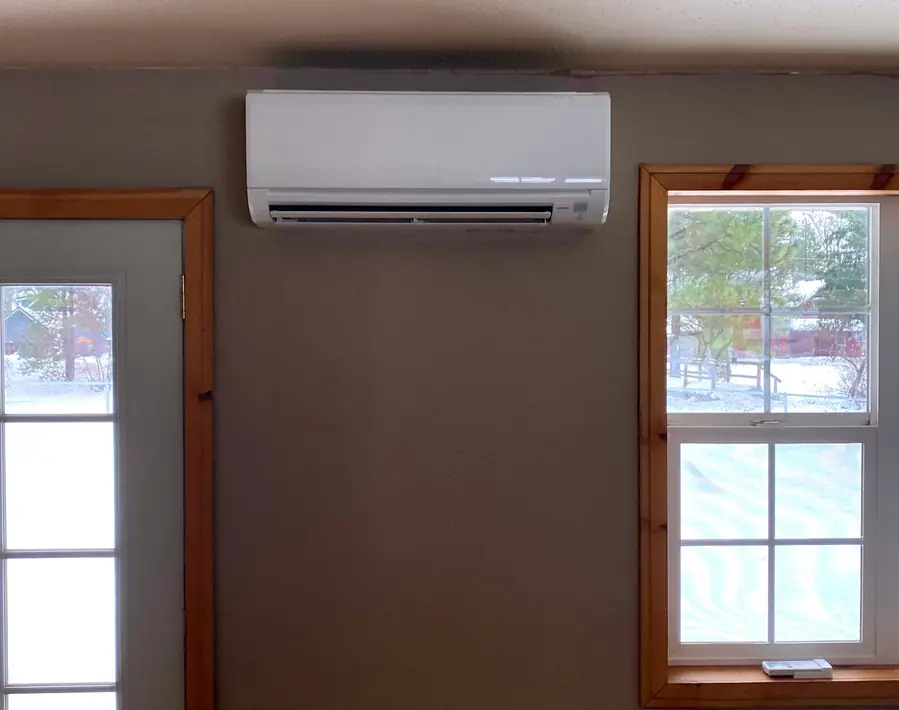
A ductless mini-split is two pieces of equipment joined by a thin bundle of lines. The outdoor unit holds the compressor. The indoor unit, called a head, hangs on a wall or ceiling and blows heated or cooled air into one room. Between them there is no ductwork, only refrigerant lines, power and a drain that pass through a small hole in the wall.
That one difference is why mini-splits solve so many comfort problems in Yakima Valley homes. Here is how the equipment works, where it fits, where it does not, and what to ask before you agree to a quote.
How a mini-split moves heat
A mini-split is a heat pump. In summer it pulls heat out of the room and carries it outdoors, the same job an air conditioner does. In winter the cycle reverses and it gathers heat from the outdoor air and brings it inside. There is still heat in cold air for a good heat pump to collect, which is why cold-climate models such as Mitsubishi's Hyper-Heat line are a common pick in Central Washington.
Each head has its own remote and its own temperature setting. That is the zoning people talk about. You can keep the bedroom cool at night while the rest of the house sits idle, or warm the room you are actually using instead of the whole building.
Because the system moves heat instead of making it with a burner or a resistance coil, it generally uses less electricity for the same comfort than baseboard heaters or an old electric furnace. That efficiency is real when the system is sized and installed correctly, and it is wasted when it is not.
Where a mini-split fits best
A handful of situations come up again and again:
- Home additions. A new bedroom or sunroom is rarely worth tying into ducts that were sized for the original house. A mini-split gives the new space its own heating and cooling and leaves the existing system alone.
- Older homes with no ducts. A house heated by baseboard or wall heaters has nowhere to hide ductwork. A mini-split avoids tearing open walls and ceilings to make room for it.
- Shops, garages and outbuildings. A space you only use some of the time does not need conditioning around the clock. A head and a remote let you heat or cool it when you are out there.
- Rooms that never match the rest of the house. The upstairs bedroom that bakes in August or the back room that stays chilly in January is usually a duct problem. One head can often fix it.
- Owners with more than one property. One Google reviewer has had mini-splits installed at all of his.
That last one comes from Doug Granstrand, who wrote in his Google review: “Very reasonable, professional installation and everything works as expected.”
The honest downsides
Mini-splits have real drawbacks, and you should hear them before you buy. A head on the wall is visible, and some people never warm to the look. Heads blend in better and run much quieter than older options, but a box on the wall is still a box on the wall.
One head conditions the room it sits in. If you want the whole house comfortable with the doors closed, you need several heads, and at some point a ducted system makes more sense. We cover that tradeoff in our article on ducted versus split systems. The outdoor unit also needs a spot with clearance, on a solid pad or on wall brackets, and every head has a filter that you will need to clean.
Mitsubishi and Daikin
We install Mitsubishi and Daikin mini-splits, and we are a Mitsubishi Diamond Contractor Dealer. Both brands build quiet, dependable equipment, so the brand is rarely what makes your system work well. Sizing and installation make that call.
A proper install includes pulling a vacuum on the line set with gauges attached, so air and moisture are out of the system before refrigerant ever flows. It is slow, unglamorous work, and a system that skips it can fail early in ways that are hard to trace back. Ask any installer how they do it.
What to ask before you buy
- How many heads do I need, and why those rooms? Ask for the reasoning behind the number.
- How was the size calculated? Bigger is not better. An oversized head shuts off before it has done its job and leaves the room uneven.
- Where will the outdoor unit sit, and where does the condensate drain go?
- Will this be my only heat, or a backup to something I already have?
- Do utility incentives apply? Pacific Power and Benton REA have programs that can apply when you upgrade from baseboard or an electric furnace. The amounts change, so ask the utility for current numbers.
If you are in Yakima or the surrounding valley and have a room, an addition or a shop that needs its own heating and cooling, call (509) 424-3245. Cydni can set up a time for us to look at the space and tell you plainly whether a mini-split is the right fit.
Seasonal Energy Services, LLC, (509) 424-3245
Call (509) 424-3245More articles
Ducted or Split? Choosing a Heating and Cooling System for Your Home or Shop
The right system depends less on the brand than on your ducts, your floor plan and how you actually live in the building.
Is an HVAC Maintenance Plan Worth It? What a Tune-Up Actually Checks
A tune-up is mostly about catching small, cheap problems before they become a no-heat or no-cooling call on the worst day of the year.